
Learning tarot
How to read tarot cards for yourself
Many people discover tarot through a very simple and very natural question: can you read the cards for yourself? The answer is yes. There is no inherent impossibility in using tarot to shed light on your own situation, your own choices or your inner state.
But this affirmative answer must be immediately nuanced: reading the cards for yourself is not always easy. The problem is not tarot itself; the problem is the emotional involvement of the querent — that is, yourself. Where reading for someone else requires accuracy, reading for yourself also requires distance, inner honesty and real interpretive discipline.
This article offers a serious, structured and encyclopedic approach to reading tarot for yourself: how to prepare, how to formulate the right question, which spread to choose, how to interpret the cards without telling yourself stories, when to stop, and how to turn tarot into a real tool for understanding rather than a simple reflex for seeking answers.spread
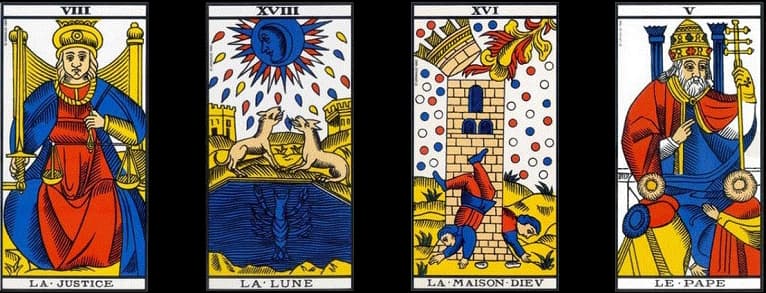
1. Can you really read the cards for yourself?
Yes, you absolutely can read the cards for yourself. This idea, sometimes challenged in certain circles, often rests on practical beliefs or informal traditions, but there is no serious reason to consider a personal reading invalid by nature.
Tarot can be used as a tool of symbolic reading, orientation, clarification or reflection. From this perspective, it is entirely logical for a person to question their own situation. After all, we write in order to reflect, we meditate to understand ourselves better, we keep a journal to give shape to experience. Tarot can play a similar role in its own way.
It is even possible to say that a regular personal tarot practice is an excellent training ground. It allows you to study the cards, see how they respond to different contexts, work on interpretation and develop a deeper relationship with the symbolic structures of the deck.
But this possibility does not imply automatic ease. Tarot for yourself is possible; it is simply not always simple. That is where the real challenge lies.
2. Why reading for yourself is harder than it seems
Reading the cards for yourself is often more difficult than reading for someone else, not because the cards “refuse” to speak, but because you are inwardly involved in the situation.
When a question touches us closely, several mechanisms can disturb the reading. We tend to project our fears, desires, imagined scenarios, anticipations or wounds onto the cards. We may also unconsciously seek confirmation instead of understanding.
That is precisely why personal tarot requires more discipline than “gift.” You have to accept that a card may not say what you would like to hear. You have to admit that a reading may contradict your inner narrative. And you must know how to give the reading time to do its work of clarification.
So the issue is not the legitimacy of personal reading, but the need for greater inner rigor. One could say that with oneself, the central question is not: “Do the cards speak?”, but rather: “Am I capable of listening to what they say, even if it shifts my point of view?”
3. How to prepare before a reading
Before drawing the cards, it is helpful to create at least a minimal frame. This frame does not need to be solemn, mysterious or complicated. It simply means moving away from an impulsive gesture and entering a state of presence.
A good starting point is to settle in a quiet place, remove distractions, breathe for a few moments and clearly identify what motivates the reading. This preparation time matters because it already helps sort out agitation, curiosity, anxiety, the real question and the genuine need for understanding.
Some people like to light a candle, clean the table, place a cloth, take a few seconds of silence or shuffle the cards slowly. All these practices can be useful, but they are not the essential condition of the reading. The real issue is less the ritual than the quality of attention.
Good preparation also means honestly recognizing your state. Am I too agitated? Going in circles? In fear? Compulsively seeking an answer? If the answer is yes, it may be wiser to postpone the reading slightly in order to recover a minimum of inner stability.
4. Formulating a clear and fair question
The quality of a reading depends greatly on the quality of the question. A confused question almost always produces a confused reading. A question that is too broad forces the cards to answer in an overly general way. A poorly oriented question often leads to a weak or artificial interpretation.
When reading the cards for yourself, it is often better to avoid absolute or obsessive formulations such as: “Will they love me?”, “Will I succeed in life?”, “Will everything work out?” These formulations too often seek total reassurance, whereas tarot works better with dynamics, conditions, tensions and orientations.
More useful formulations might be:
- What is the current dynamic of this situation?
- What do I need to understand in this bond or this project?
- What is the main blockage here?
- Which direction seems most coherent for me?
- What is this period really asking of me?
The more precise the question, the finer the reading can be. A good question is not necessarily narrow; it is above all well structured. It opens a real reading instead of forcing a binary or emotionally saturated answer.
5. Choosing the right spread for yourself
When reading for yourself, it is often better to start with simple structures. The more emotionally involved you are, the more a cluttered spread is likely to become confusing. A simple spread, by contrast, helps preserve a readable framework.
The one-card spread is excellent for identifying a main dynamic, the tone of a day or an inner axis. The three-card spread already allows you to enter a more structured logic: situation / obstacle / advice, past / present / evolution, or even me / other / relationship.
The cross spread can be very useful for a denser question, provided you are already somewhat comfortable with reading positions. It clarifies what is at stake, what blocks, what helps and where the situation tends.
Larger spreads, such as the 12 houses spread, are fascinating but more delicate when reading for yourself, because they produce a great deal of information. They are better suited to study time, period reviews or panoramic readings than to immediate emotional questioning.
The general rule is simple: the more specific the question, the simpler the spread should remain. The broader the period, the more you may choose a large structure, provided you have the time and method required.
6. How to interpret your own cards
Once the cards are drawn, the real work begins: contextual interpretation. Reading your own cards does not mean immediately looking for an emotionally comfortable answer. It means observing, describing, connecting and thinking.
The first step is to look at the cards even before “knowing.” What is the general energy of the reading? Are there cards of movement, stoppage, tension, openness, transformation? Does the whole feel fluid, conflictual, suspended, heavy, illuminating?
Then you must take position into account. A card does not have the same meaning in a blocking, resource, advice or evolution position. That is where the framework of the spread protects you from floating interpretation.
Then comes the relationship between the cards. Two cards can reinforce, nuance or contradict each other. A very active card may be slowed by a card of suspension. A hopeful card may be preceded by a card of crisis, which tells of a passage rather than a simple state.
Finally, you must always return to the question. The same card will not be read in the same way if the matter concerns a professional project, an emotional bond, a move, inner fatigue or a moment of transition.
When reading for yourself, it is very helpful to write a first sober interpretation, then reread it a few hours later or the next day. This simple time gap often makes it possible to move beyond the immediate reaction and hear more accurately what the reading was bringing to light.
7. The most common mistakes
One of the most common mistakes is to draw the cards again and again on the same question, hoping to finally obtain the desired answer. This repetition does not clarify: it blurs. It turns tarot into an instrument of anxiety rather than a tool of illumination.
Another mistake is to treat the cards as automatic answers. Tarot is not a machine of slogans. A card is not a keyword pasted onto reality; it is a symbolic structure to be interpreted.
There is also the mistake of projection: seeing in the cards what you already think. For example, if you hope for reconciliation, you may be tempted to read any bright card as confirmation, even if the rest of the spread speaks of waiting, distance or inner work.
Conversely, some people overdramatize the reading and interpret the slightest tense card as catastrophe. Here again, the problem is not the card, but the way it is received.
Finally, many personal readers neglect the overall coherence. They describe each card separately without producing an overall reading. Yet a serious spread is not a collection of isolated meanings; it is an architecture of meaning.
8. When it is better not to read
There are moments when it is better not to draw the cards, or at least to wait. For example, when you are in too much agitation, acute emotional crisis, a compulsive need for an immediate answer or obsessive repetition around the same topic.
In those moments, tarot risks being instrumentalized to calm anxiety in the short term, without real interpretive space. You are no longer asking the reading to clarify; you are asking it to soothe. And that is not the same thing.
It may then be wiser to pause, write down your question, go outside, sleep on it or come back to the reading once the inner pressure has subsided a little. A reading done in a more stable state will often be much more meaningful.
Knowing when not to read is also part of maturity in practice. Tarot must not become a compulsive crutch; it should remain a tool of lucid guidance.
9. Why keep a tarot journal
One of the best ways to progress in personal tarot is to keep a tarot journal. You note the date, the question, the spread structure, the cards drawn, the immediate interpretation, and then possibly what was confirmed, shifted or revealed over time.
This journal serves several functions. First, it protects against forgetting and hindsight reconstruction. Second, it allows you to verify what the cards were really saying instead of reinterpreting them according to your emotional state later on.
It also makes it possible to see recurrences: certain cards return in the same types of situations; certain questions always produce vague readings; certain spreads prove more useful than others depending on the themes involved.
Finally, the journal develops a more serious relationship with tarot. You no longer consume cards; you study a language. You no longer seek only an immediate answer; you build an interpretive memory.
10. Making tarot a true tool for self-knowledge
Reading the cards for yourself can become a very rich practice, provided tarot is not reduced to an automatic answer machine. Tarot becomes truly fertile when it is approached as a language of symbols, tensions, cycles and orientations.
From this perspective, the reading does not serve to abolish uncertainty, but to think it more clearly. It does not remove the subject’s responsibility; it illuminates it. It does not eliminate reality; it helps read it better.
Practiced seriously, personal tarot develops several qualities: inner clarity, observational ability, discernment, interpretive patience, attention to symbols, understanding of dynamics and repetitions. It teaches you to read differently what is happening in a given period.
In other words, reading the cards for yourself is entirely possible — but the most important thing is not simply to draw. The most important thing is knowing how to look, wait, connect, understand and remain honest with what appears.
A simple method to begin
- Take a few minutes to settle yourself and clarify what is troubling you.
- Formulate a short, precise and genuinely useful question.
- Choose a simple spread: one card or three cards.
- Write down the cards drawn before any interpretation.
- Observe the general energy, then the function of each position.
- Write a sober interpretation without trying to force an answer.
- Reread your spread later to let distance do its work.
Key takeaways
- Yes, you can read the cards for yourself.
- The real difficulty is not technical, but psychological and interpretive.
- A good personal reading requires distance, a clear question and a coherent framework.
- Simple spreads are often the most relevant for personal practice.
- Compulsively repeating readings on the same question blurs the interpretation.
- Keeping a tarot journal helps enormously with progress.
- Personal tarot is more fertile as a tool for understanding than as a machine for certainty.
Related articles
Frequently asked questions
Can you really read the cards for yourself?
Yes. It is entirely possible to read the cards for yourself. The real difficulty is not technical but interpretive: you must remain lucid, avoid projection and accept that the reading will not always confirm what you hope for.
Which tarot spread should you choose for a personal reading?
For a personal reading, the most useful structures are often the one-card spread, the three-card spread and, in some cases, the cross spread. The simpler the question, the more restrained the spread should remain.
Can you read the cards every day?
Yes, but with moderation. A card of the day can be a very good symbolic observation exercise. On the other hand, endlessly repeating readings on the same question often produces confusion, dependency and loss of perspective.
Why is it more difficult to read tarot for yourself?
Because you are emotionally involved in the situation. You then risk unconsciously selecting what reassures you, overinterpreting certain cards or rejecting messages that disturb you.
Do you absolutely need a ritual before drawing the cards?
No. A ritual is not essential. What matters above all is the quality of presence, the clarity of the question, inner calm and the coherence of the method.