
History of tarot
The history of the Tarot de Marseille
Today, the Tarot de Marseille is one of the best-known, most studied and most commented-on tarot decks. Yet its real history is older, more nuanced and more fascinating than modern representations suggest when they reduce it to a purely esoteric or divinatory support.
To understand the Tarot de Marseille, one must go back to the Italian Renaissance, follow the spread of the cards across Europe, observe the role of the master cardmakers and distinguish the material history of the decks from their later symbolic rereadings.
The origins of tarot in the Renaissance
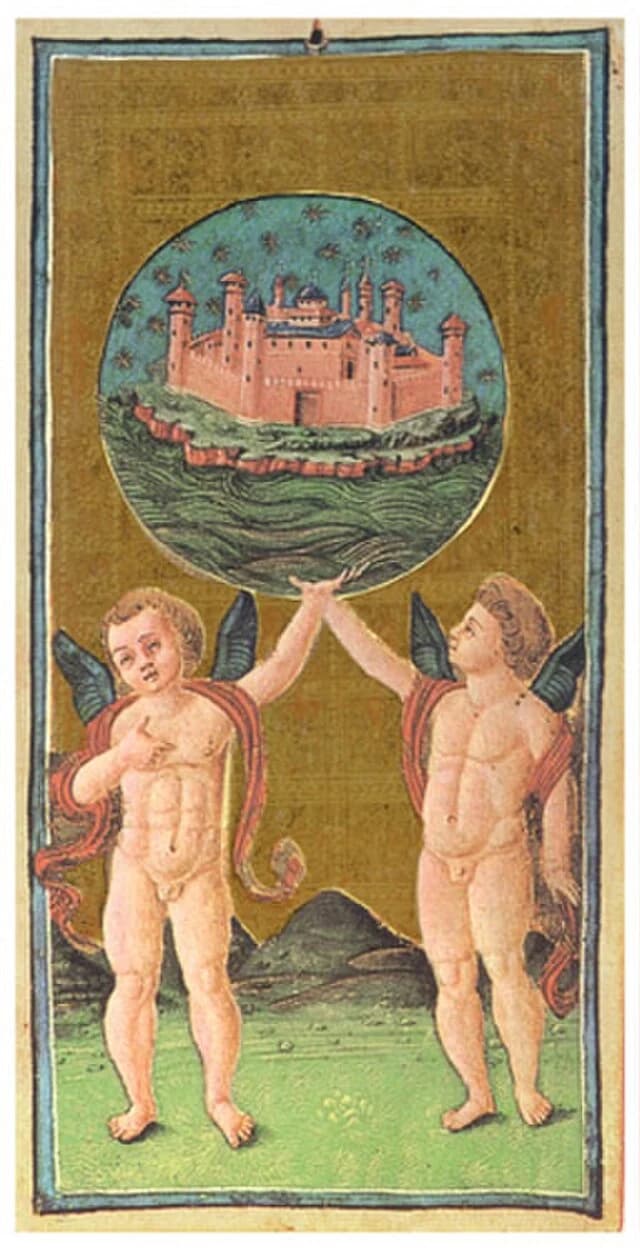
The first tarot decks appeared in Italy in the fifteenth century. At that time, tarot was not yet a divinatory support in the modern sense. It was a complex card game used in aristocratic and cultivated circles, especially in northern Italy.
Among the most famous surviving examples are the so-called Visconti-Sforza decks. These luxurious, often hand-painted sets testify to a refined cultural context in which image, allegory and social prestige played a central role.
Early tarot already included several structuring elements:
- four suits, like other card games;
- court cards;
- a series of trumps that would later become the major arcana.
These cards do not yet form the Tarot de Marseille in the strict sense, but they constitute one of the essential historical roots of European tarot.
The spread of the cards across Europe
From the sixteenth century onward, tarot decks gradually circulated through different regions of Europe. Models were transformed, adapted and transmitted from one workshop to another. The cards became less aristocratic and entered more fully into artisanal and commercial production circuits.
This spread explains why tarot does not have a single simple origin or a single stable form from the beginning. Its history is made of transmissions, copies, regional variants and successive transformations.
It is also in this context that the foundations of what would later be called the tarot’s iconographic sources emerged: religious imagery, moral representations, popular traditions, royal power, allegorical virtues, figures of death, judgment, the world or the wheel of fate.
How the Tarot de Marseille took shape
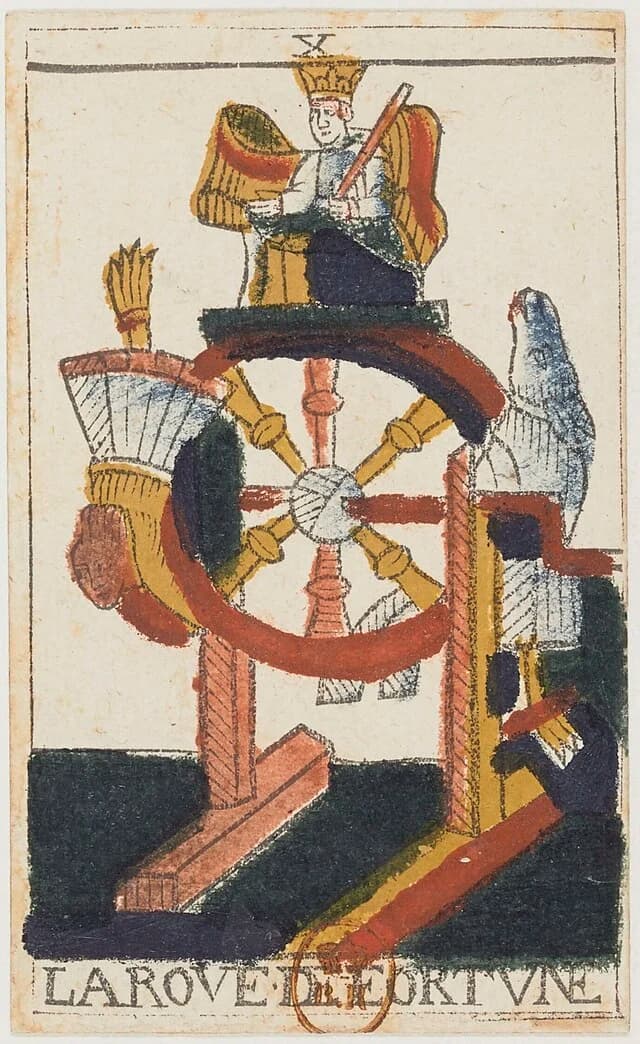
The expression “Tarot de Marseille” does not refer to a single deck created in one place at one date. Rather, it refers to a family of decks sharing a recognizable structure and iconographic kinship.
This tradition gradually stabilized between the seventeenth and eighteenth centuries. Several early decks allow us to observe this progressive formation, notably those of Jean Noblet, Jean Dodal and Nicolas Conver.
What gives unity to this tradition is not the perfect identity of every image, but the permanence of a common architecture: the same great trumps, the same major figures, the same overall visual relationships, despite differences in detail.
The decisive role of the master cardmakers
Tarot did not transmit itself on its own. It was produced, engraved, printed and distributed by specialized artisans: the master cardmakers.
These artisans worked with engraved woodblocks and then printed the cards before coloring them. Their gestures, graphic choices and technical constraints played a major role in the evolution of tarot.
This is why the history of the Tarot de Marseille is also a material history. It concerns both the transmission of images and the circulation of the printed objects themselves.
Tarot de Marseille Type I and Type II
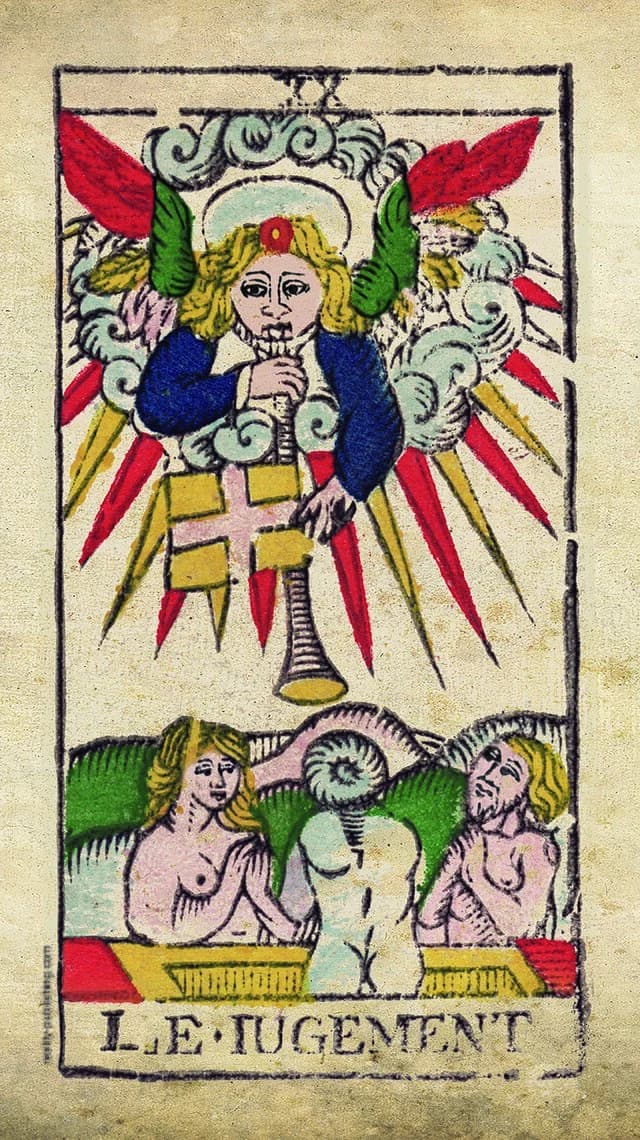
Tarot historians often distinguish two major iconographic families: Type I and Type II.
Type I corresponds to the oldest forms of the Marseille tradition. The Noblet and Dodal decks are often the most cited references. Their drawing shows certain details and an earlier state of the iconography.
Type II corresponds to a more stabilized, more homogeneous and more widely diffused iconography, of which the Conver deck is one of the most emblematic examples.
This distinction is important because it shows that the Tarot de Marseille is not a fixed block, but a living tradition that has gone through several successive states.
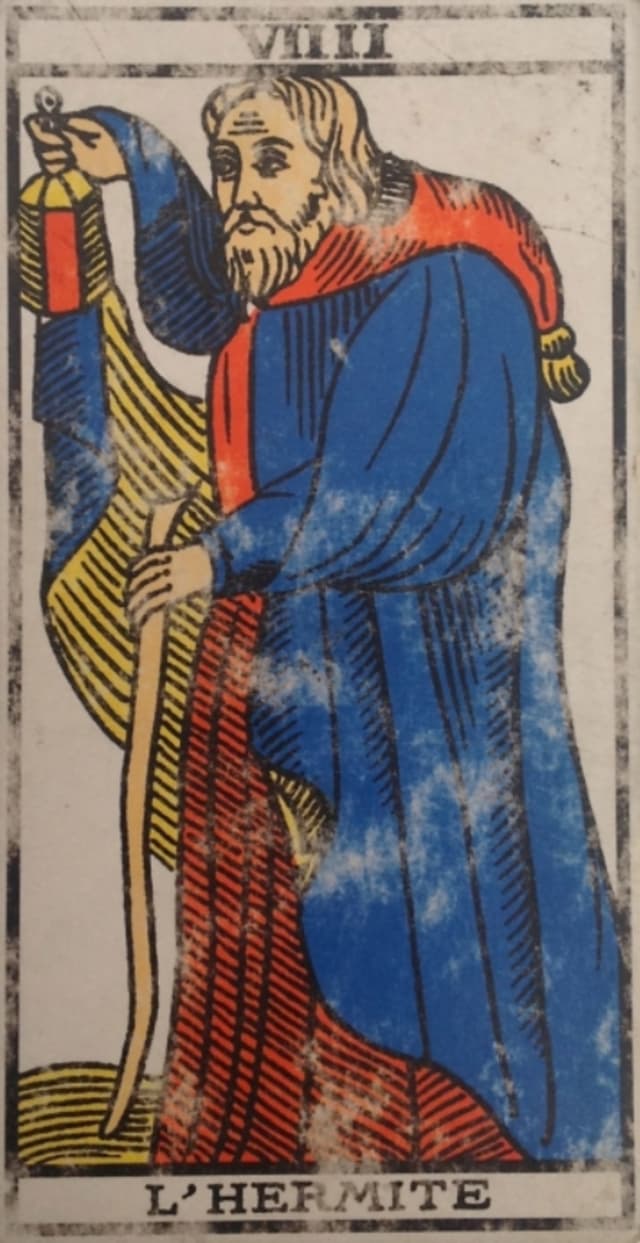
The esoteric rereading of tarot
Until the eighteenth century, tarot was primarily known as a card game. Only later did it gradually become a support for symbolic interpretation, and then a major object of certain esoteric traditions.
Figures such as Etteilla, Papus or Éliphas Lévi helped connect tarot with cartomancy, Kabbalah, esotericism and Hermeticism.
This phase is crucial for understanding modern tarot, but it must not be confused with the historical origin of the cards. In other words: the Tarot de Marseille is old, but not all the theories associated with it today are.
Why the Tarot de Marseille is still alive today
If the Tarot de Marseille continues to fascinate, it is because it stands at the meeting point of several dimensions: historical object, visual heritage, symbolic system, pedagogical tool and language of interpretation.
It can be studied as a cultural document, as an iconographic structure or as a support for symbolic reading. This plurality explains its longevity and its power of attraction.
Understanding its history helps avoid simplifications. The Tarot de Marseille is neither a pure relic of the past nor a simple machine for predicting the future. It is a living heritage, shaped by centuries of transmission, reinterpretation and practice.
Key points
- Tarot was born in Renaissance Italy as a card game.
- The Tarot de Marseille gradually took shape between the seventeenth and eighteenth centuries.
- Master cardmakers played an essential role in its transmission.
- Type I and Type II show the internal evolution of the iconography.
- The esoteric reading of tarot is later than its material history.