
How to interpret a tarot card
Learning how to interpret a tarot card is one of the fundamental steps in understanding the symbolic language of tarot. Contrary to a widespread idea, a card never has a single fixed meaning.
In a serious reading, a card must be understood as a symbol that takes meaning within a precise context: the question asked, the position in the spread and the relationship with the other cards.
The principle of tarot interpretation
Interpreting a card means understanding what it reveals in a given situation. Tarot works as a symbolic language in which each arcana represents a dynamic, a tension or a stage of human experience.
A card should therefore never be isolated from its context. In a spread, the cards form a coherent structure in which each blade contributes to illuminating the overall situation.
For this reason, experienced tarot readers avoid reducing cards to simple keywords. A serious reading seeks instead to understand the symbolic logic of the whole spread.
The elements to analyze in a card
Several elements make it possible to understand the message of a tarot card.
- The symbolic meaning of the card
- The position in the spread
- The neighboring cards
- The question asked
It is the combination of all these elements that makes it possible to produce a coherent interpretation.
The role of symbolism
The Tarot de Marseille is based on rich iconography: colors, objects, gestures, characters and directions of gaze all have symbolic value.
Understanding these symbols makes it possible to move beyond a superficial reading of the cards and enter a deeper approach to tarot.
That is why the study of symbolism is essential for interpreting the arcana correctly.
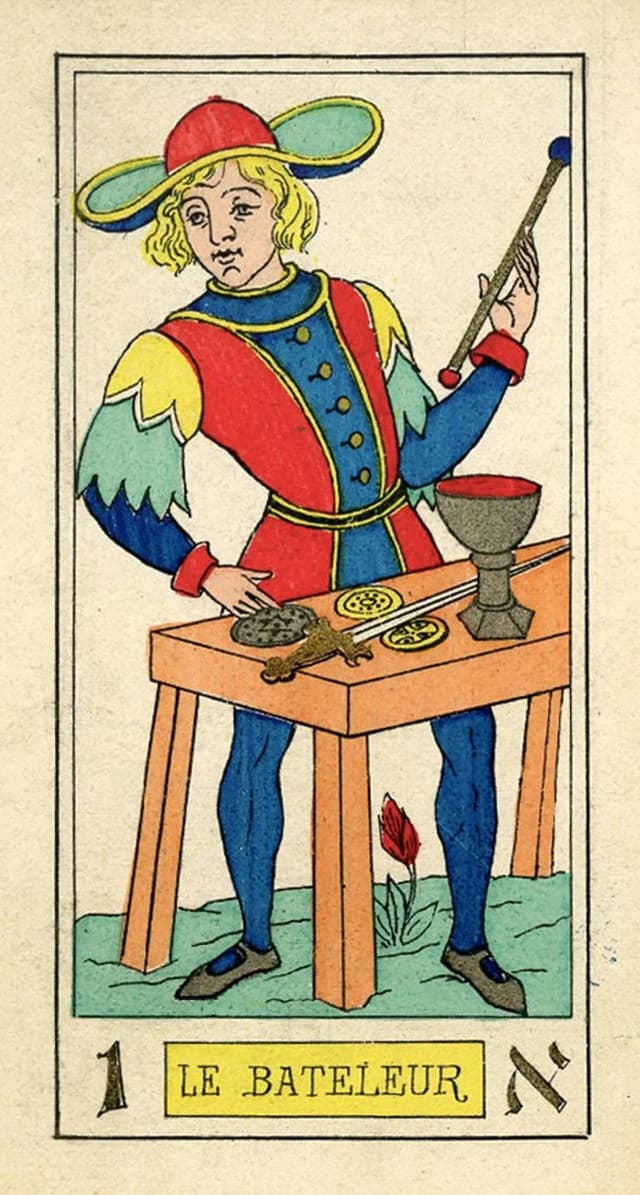
Example: interpreting the Magician
The Magician is often associated with beginnings, initiative and the ability to act.
In a professional spread, it may represent a new opportunity or a project in its early stages.
In a relationship spread, it may indicate the beginning of a meeting or a dynamic that is still fragile.
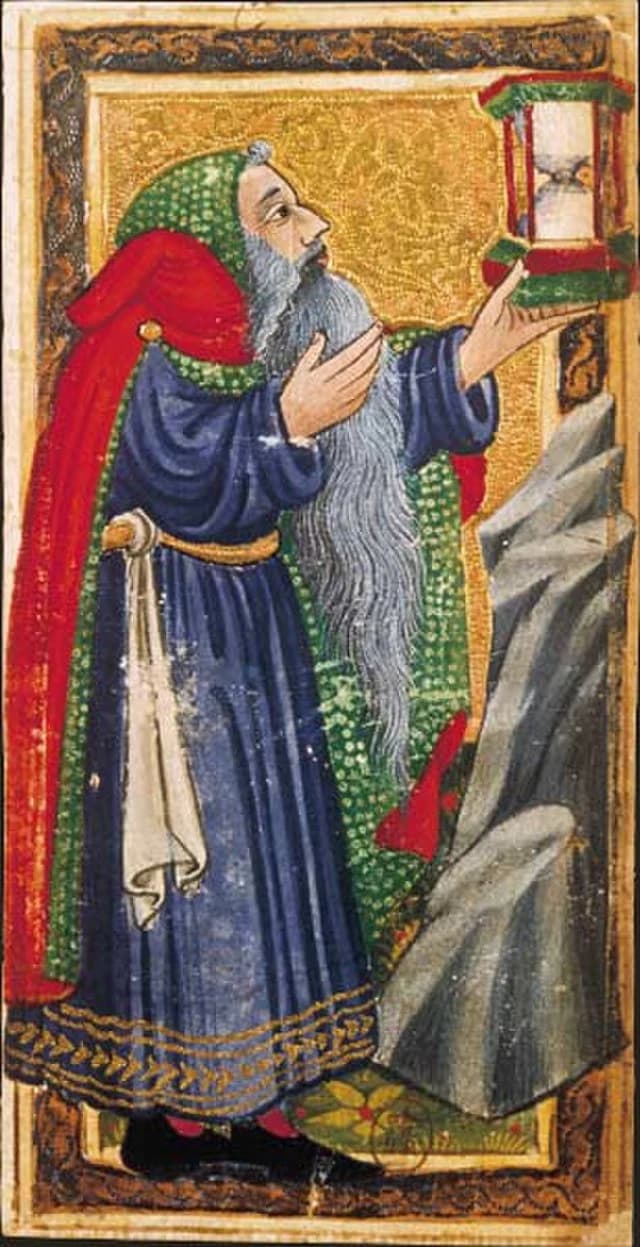
Example: interpreting the Hermit
The Hermit evokes distance, reflection and maturity.
In a spread concerning an important decision, this card may suggest the need to take time to reflect before acting.
How to improve in tarot interpretation
- observe the symbols on the cards carefully
- avoid overly rigid interpretations
- analyze the overall dynamic of the spread
- practice reading the cards regularly
With experience, the cards cease to be simple images and become a true symbolic language.
Related articles
Frequently asked questions
Does a tarot card have only one meaning?
No. A card can take on several meanings depending on the question asked, its position in the spread and the cards around it. Interpretation always depends on the overall context.
Can you learn to interpret tarot on your own?
Yes. With practice, the study of card symbolism and the regular analysis of spreads, it is possible to develop a coherent and personal reading of tarot.
Do you need to memorize the meaning of every card?
Learning traditional meanings can help at first, but what matters most is understanding the symbol of each card and the way it interacts with the other cards in the spread.
Do reversed cards change the interpretation?
Yes. In some methods, reversed cards modify the dynamic of the blade. They can indicate a blockage, a tension or an energy that expresses itself differently.
How many cards do you need to interpret a spread?
That depends on the method used. Some spreads use a single card, while other structures such as the cross or the 12-house spread allow for a more complete analysis of the situation.