
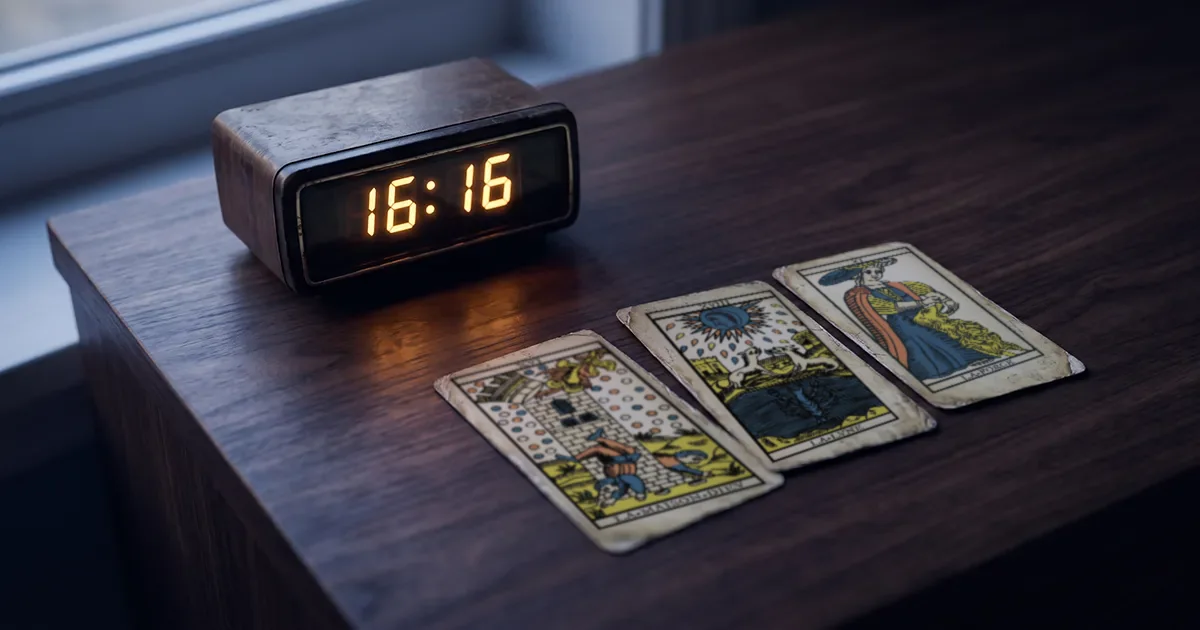
Tarot and everyday life
Mirror hours and tarot: the card for 11:11, 22:22 and every repeating time on the clock
It is 11:11, you glance at your phone, and something tells you it is not a coincidence. In the United States, “angel numbers” is searched 133,000 times a month and “1111 meaning” 41,000 times; in the UK, “2222 meaning” gets 7,000 searches a month. French speakers call these repeating times mirror hours (<i>heures miroirs</i>), and their websites almost always attach a tarot card to each one.
This article gives you the complete table, from 00:00 to 23:23, with the Tarot de Marseille card for each mirror hour and the rule that produces it. It opens with a fact none of those pages mention: one minute in every sixty is a mirror hour. Seeing them often is not a sign. Doing something with them, on the other hand, can be.
Published on November 6, 2026 · updated on November 6, 2026 · Stéphane Gamot
Key points
- A mirror hour is one minute in sixty. Check the time forty times a day and you will meet one every day and a half, by plain arithmetic. A 12-hour display changes nothing about the odds, but it limits the cards to I–XII.
- The belief is recent: 11:11 dates from 1992 (Solara), “angel numbers” from 2005 (Doreen Virtue), and the tarot correspondence from French-language websites of the 2010s.
- The TarotNova rule is transparent: the hour is the card's number. 01:01 = The Magician, 16:16 = The Tower, 21:21 = The World. The Fool takes 00:00 and 22:22; The Hierophant takes 23:23 by reduction (2 + 3).
- A card does not send you a message: it asks you a question. The table below gives the question for each hour, with a link to the card's full page.
- Websites disagree with each other about 22:22, 23:23 and reversed times such as 13:31. When a correspondence changes from one site to the next, it is a convention, not a tradition.
One minute in sixty: why you see so many mirror hours
A day has 1,440 minutes. Twenty-four of them are mirror hours (00:00, 01:01 … 23:23): one minute in sixty. If you check the time forty times a day, you will land on a mirror hour two days out of three, around twenty times a month. That is not a sign. It is a frequency.
Add the reversed times, where the minutes flip the digits of the hour (01:10, 12:21, 13:31, 21:12 …): there are thirteen of those a day. Thirty-seven notable minutes out of 1,440, one in thirty-nine. At forty glances a day, that is one a day, seven a week. Anyone who “sees mirror hours all the time” is describing exactly what the arithmetic predicts. A 12-hour display does not change the odds either: 1:01 to 12:12 come round twice a day, which still makes twenty-four. What it changes is the cards, and we come back to that in the rule section.
How many mirror hours will you see this week, by chance alone?
| Glances per day | Repeating times (24 a day) | Repeating + reversed (37 a day) |
|---|---|---|
| 20 | 2.3 a week | 3.6 a week |
| 40 | 4.7 a week | 7.2 a week |
| 80 | 9.3 a week | 14.4 a week |
Sleep does not alter the ratio: between 08:08 and 23:23 there is still one mirror hour every hour.
So why does it feel personal? Because memory does not keep the other fifty-nine minutes. Nobody remembers seeing 16:09. The linguist Arnold Zwicky named the bias in 2005: the frequency illusion. Once something has caught your attention you notice it everywhere, and each sighting confirms the first. The phenomenon had already picked up a nickname ten years earlier on a St. Paul Pioneer Press discussion board: the Baader-Meinhof effect.
Two further mechanisms join in. Apophenia, described by the psychiatrist Klaus Conrad in 1958: the tendency to perceive connections between unrelated events. And the need for a story: a coincidence without a narrative is uncomfortable, so we give it one. Jung called a coincidence that feels meaningful to the person living it synchronicity. He insisted on the meaning as experienced, never on a message being sent.
Where the belief comes from: 1992, 2005, and the web of the 2010s
There is nothing ancient about mirror hours. They were born with digital clocks, which display 11:11 where a hand showed nothing, and they spread in three waves: the 11:11 of American New Age circles in 1992, Doreen Virtue's “angel numbers” in 2005, then French-language websites that added angels, numerology and tarot.
The documented starting point is American. On 11 January 1992, a New Age teacher known as Solara organised a worldwide meditation she called the 11:11 Doorway, and published 11:11: Inside the Doorway (Star-Borne Unlimited) the same year. In those circles 11:11 became a “wake-up call”, later relayed by the illusionist Uri Geller's website.
Second wave: in 2005 Doreen Virtue published Angel Numbers with Hay House, then Angel Numbers 101 in 2008. The book is a dictionary: for every digit sequence, a message attributed to the angels. It is the book that fixed the idea that a repeated number is a communication. The author left the New Age movement in 2017; her lists are still everywhere. In English the phenomenon rarely travels under the name “mirror hours”, a French coinage: it lives under “angel numbers” and “11:11”.
Third wave, French-speaking. The mirror-hour websites that appeared in the 2010s stack three systems: Virtue's angelic message, numerology (add the digits: 16 + 16 = 32, 3 + 2 = 5) and a guardian angel drawn from the tradition of the 72 angels. That tradition comes from Christian Kabbalah: Lazare Lenain codified it in 1823 in La Science cabalistique (reissued by Papus in 1909), with one angel for every five days of the year and, within the day, one angel for every twenty minutes: 72 times twenty minutes make twenty-four hours.
Tarot arrives last, as a fourth layer, and in the simplest possible way: the hour gives the card's number. 13:13 becomes card XIII, 16:16 The Tower, 18:18 The Moon. As far as we know, no reference author on tarot has written a line about mirror hours. The correspondence is a web invention, recent and practical. That is no reason to reject it. It is a reason to say what it is.
The hour rule: how TarotNova assigns a card to each time
We kept the simplest rule, because it is the only one you can check at a glance: the hour number is the card's number. 01:01, The Magician (I). 09:09, The Hermit (VIIII). 21:21, The World (XXI). Four cases fall outside the rule; here is how we settled them, and why.
00:00: The Fool
The Fool is the only card in the Tarot de Marseille without a number. Midnight, the hour without a number, belongs to it.
22:22: The Fool again
In Tarot de Marseille additions The Fool counts as 22; that is the rule in our spreads and in the birth card. So The Fool opens and closes the day: 00:00 and 22:22. Other sites reduce 22 to 4 and give The Emperor. We prefer to stay consistent with the rest of the site.
23:23: The Hierophant
23 is beyond 22, so we reduce: 2 + 3 = 5, The Hierophant. That is the method we apply to the sums in our spreads. Elsewhere, 23:23 gives The Hierophant, The Fool, or even a King of Wands: the card changes with the author, which is the proof that we are dealing with a convention.
Reversed times (13:31, 21:12 …): the hour decides
For 13:31 we read card XIII, as for 13:13. The minutes flip the digits of the hour; they do not change the hour. Some people add hours and minutes (13 + 31 = 44, 4 + 4 = 8, Justice): defensible, and simply another convention.
Two notes to finish. The numbering here follows the Tarot de Marseille: VIII Justice, XI Strength. Most English-speaking readers use the Rider-Waite-Smith, where the two are swapped: if that is your deck, 08:08 is Strength and 11:11 is Justice. And a point about the 12-hour clock: if your phone shows 4:16 pm rather than 16:16, only cards I to XII can ever appear, each twice a day. Switch the display to 24 hours and the whole table opens up. Finally, the rule “reveals” nothing: it picks one card out of twenty-two, arbitrarily but consistently. Which is exactly what we ask of a one-card draw.
The full table: the 24 mirror hours and their card
Each row gives the time, the Tarot de Marseille card under the hour rule, and the question that card asks, not what it announces. The card's name leads to its full page: symbols, upright and reversed meanings.
| Time | Card | The question it asks |
|---|---|---|
| 00:00 | What are you leaving behind, and what are you carrying with you? | |
| 01:01 | What are you starting, with the tools you already have to hand? | |
| 02:02 | What have you already understood but not yet said? | |
| 03:03 | 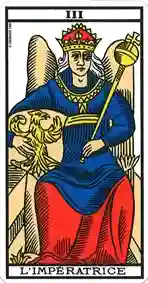 IIIThe Empress | What is asking to take shape: a word, a project, a decision? |
| 04:04 | 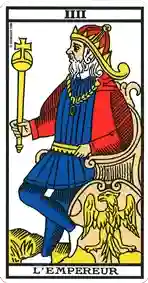 IIIIThe Emperor | What are you leaning on? Does it really hold? |
| 05:05 | Who is teaching you something right now, and what are you passing on? | |
| 06:06 | What are you hesitating between, and who is choosing for you? | |
| 07:07 | 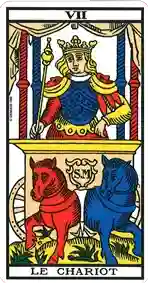 VIIThe Chariot | Where are you heading so fast, and are you holding the reins? |
| 08:08 | 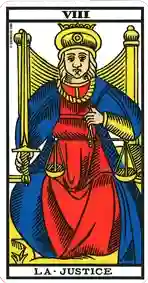 VIIIJustice | What are you weighing? What would be fair, and not merely pleasant? |
| 09:09 | 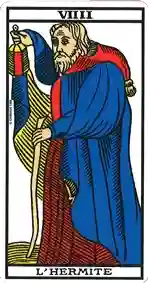 VIIIIThe Hermit | What would you need to step away from in order to see clearly? |
| 10:10 | What is changing without asking your opinion? | |
| 11:11 | 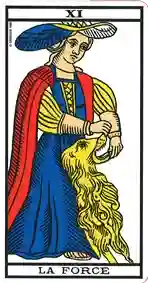 XIStrength | What are you taming right now, instead of fighting it? |
| 12:12 | What are you waiting for? And what if the waiting were the work? | |
| 13:13 | 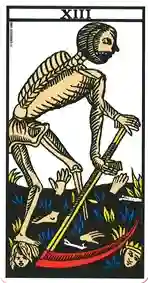 XIIIDeath | What is over, and what have you not yet let go of? |
| 14:14 | 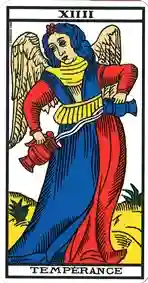 XIVTemperance | What are you blending, and in what proportions? |
| 15:15 | What has a hold on you, and why do you enjoy it? | |
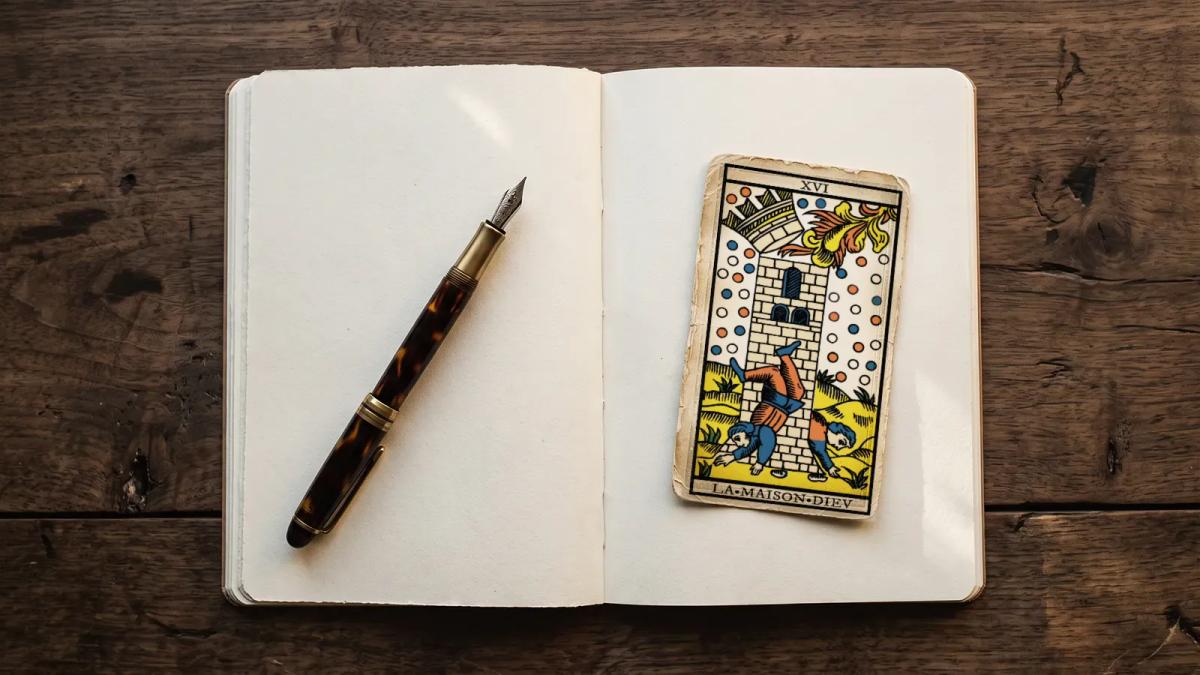
| 16:16 | 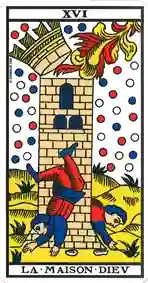 XVIThe Tower | What is collapsing, and what does that set free? |
| 17:17 | 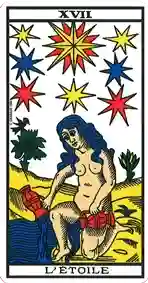 XVIIThe Star | What are you moving towards naturally, without effort? |
| 18:18 | 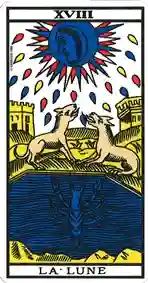 XVIIIThe Moon | What are you imagining right now, instead of checking? |
| 19:19 | 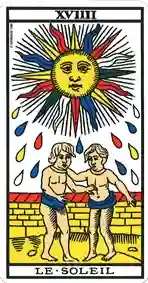 XIXThe Sun | What is simple and clear, and what are you complicating? |
| 20:20 | What is calling you, and for how long has it been calling? | |
| 21:21 | 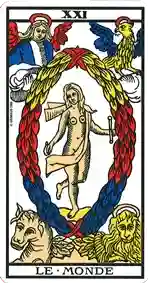 XXIThe World | What have you accomplished without acknowledging it? |
| 22:22 | 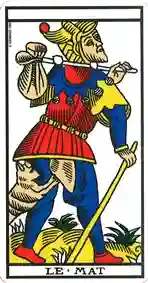 22The Fool | What makes you free, and what does it cost? |
| 23:23 | 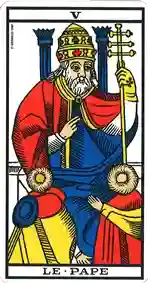 2 + 3 = VThe Hierophant | What did you learn today that deserves to be passed on? |
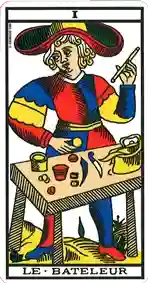
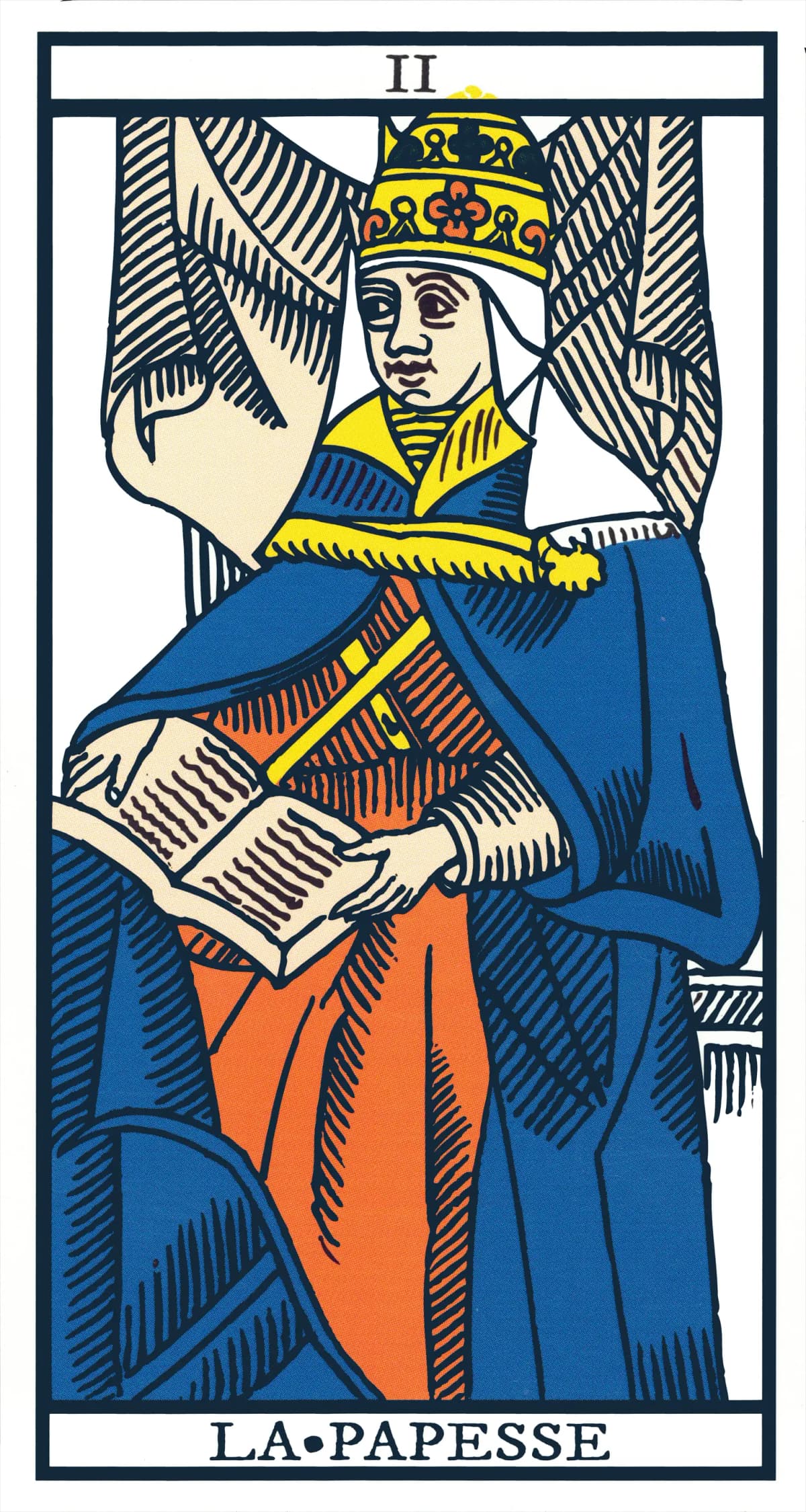
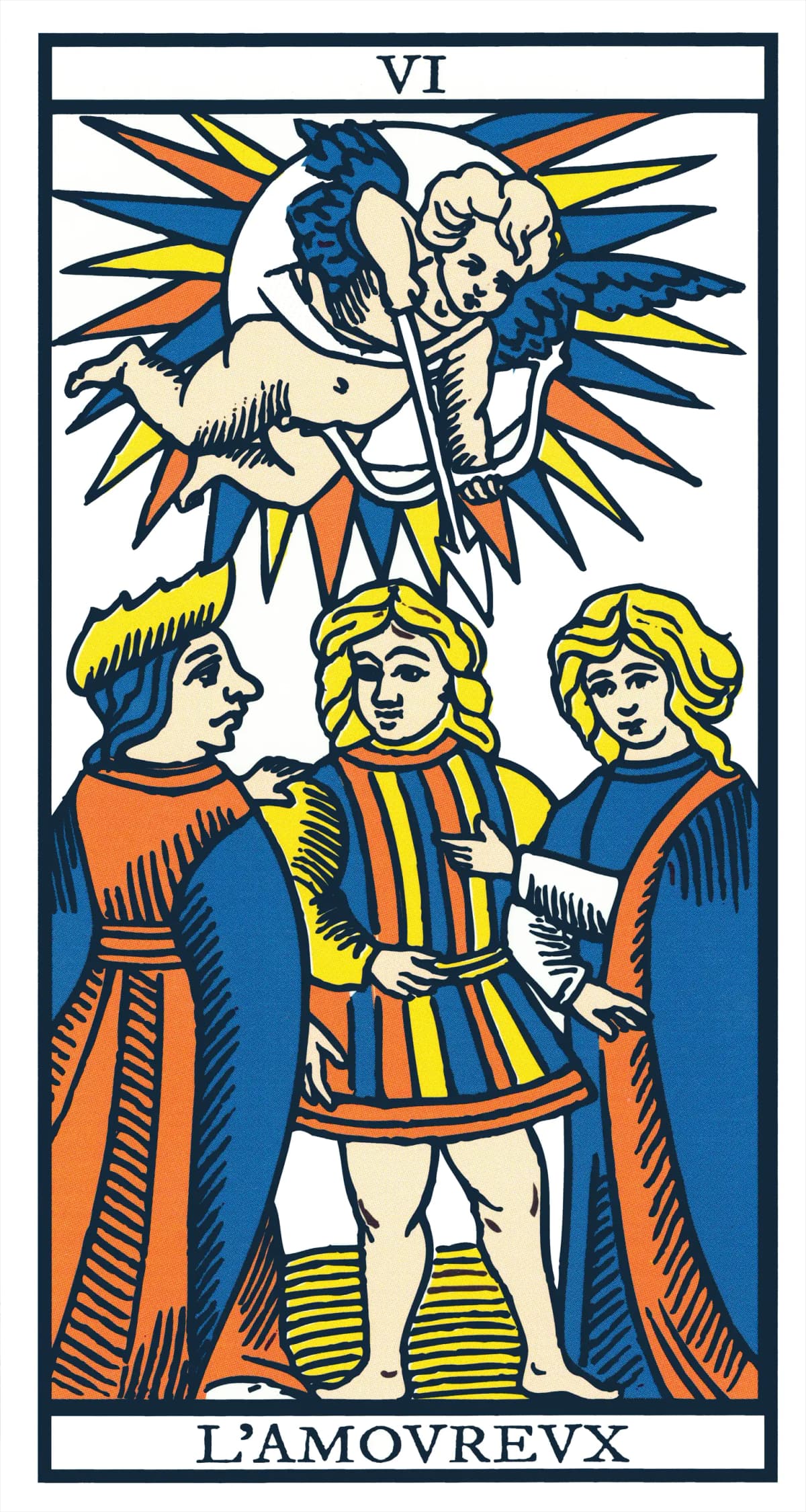
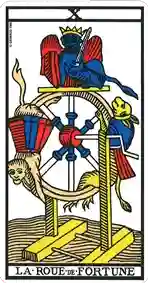
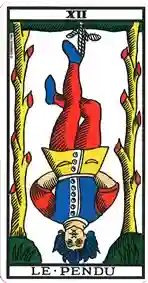
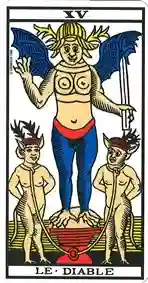
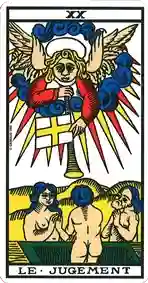
Reversed times follow the same table: 13:31 points to the 13:13 row, 21:12 to 21:21, 01:10 to 01:01, and so on. On a 12-hour display, 10:22 pm is 22:22 and 4:16 pm is 16:16.
The times everyone looks up: 11:11, 22:22, 16:16, 18:18, 13:13
A handful of times draw most of the searches. According to Ahrefs in November 2026, “11:11 meaning” is searched 20,000 times a month in the United States and “1111 meaning” 41,000; in the UK, “2222 meaning” gets 7,000, “22:22 meaning” 1,600 and “16:16 meaning” 600. For each of them, the question its card asks, and what it does not say.
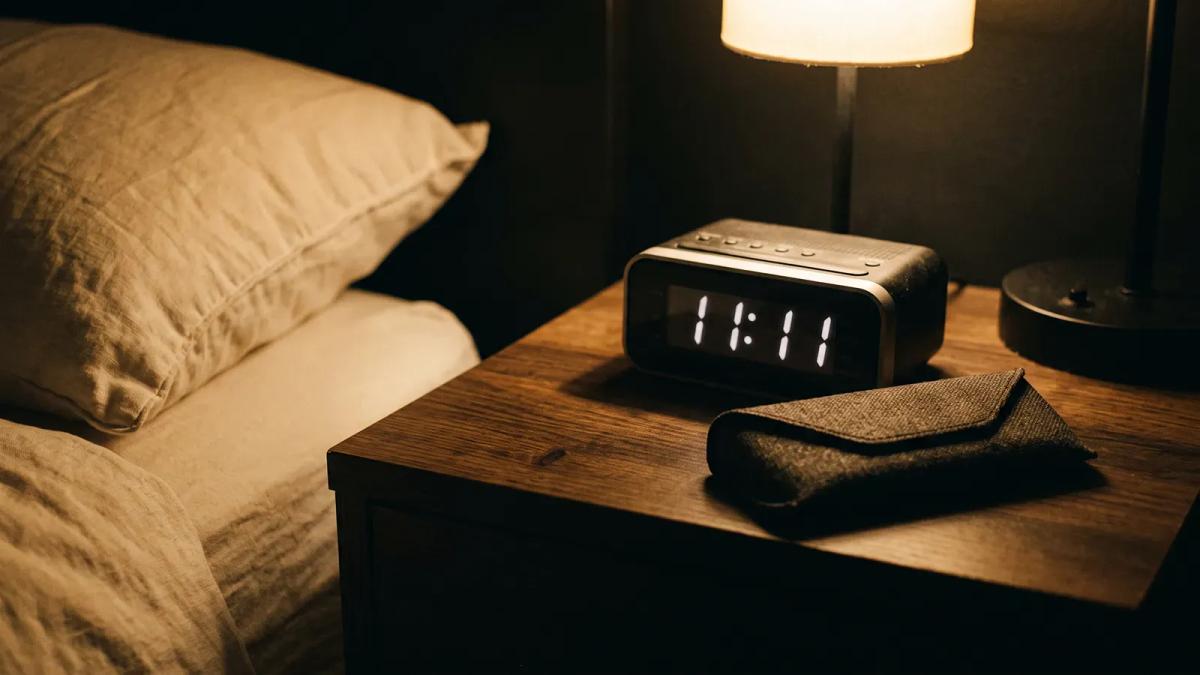
11:11: Strength
The most searched time on the web, the one people make a wish on. Card XI shows a woman holding a lion's jaws open with no visible effort. The question: what are you mastering right now through patience rather than force? The 11:11 wish is a schoolyard habit; it has at least the merit of making you put into words what you want. Strength adds: and what will you do to hold it? If your deck is the Rider-Waite-Smith, 11 is Justice, and the question becomes what you are weighing.
22:22: The Fool
A double twenty-two, and a card without a number that counts as 22 in Marseille sums. The Fool walks on, bundle over his shoulder, an animal at his heels. End of the day: what makes you free, and what are you leaving behind? Websites often promise that “someone who loves you is about to get in touch”. We do not know that, and neither do they. The card speaks of your movement, not other people's.
16:16: The Tower
A tower struck by lightning, two figures falling or diving, coloured spheres in the air. The most dreaded time, wrongly: The Tower is the card of what opens up when a structure that had grown too tight gives way. The question at 16:16: what is cracking right now, and what does that let you breathe? Nothing in the card announces an accident.
18:18: The Moon
Night is falling, and The Moon is the card of things you guess at more than you see: a pool of water, a crayfish, two dogs howling. The question: what are you imagining right now about someone or something that you could simply check tomorrow morning? The Moon does not announce a betrayal. It signals that the lighting is poor.
13:13 and 13:31: Death, the card without a name
The only numbered card in the Tarot de Marseille with no title: a skeleton reaping. The Rider-Waite-Smith calls it Death. Neither version speaks of a physical death; both speak of what is finished and still being held. The question at 13:13: what is over in your life that you have not yet buried? We read 13:31 with the same card: the hour decides.
23:23 and 00:00: The Hierophant, then The Fool
23:23 reduces to 5, The Hierophant: the card of transmission, of frameworks, of the meaning we give to things. The question: what did you learn today that is worth telling someone? Then midnight returns to The Fool, the hour without a number to the card without a number: what are you leaving behind as the day turns? Two times that answer each other an hour apart: the reckoning, then the departure.
Doing something with it: the three-step method
A mirror hour does not send you a message. But it stops you for a second, and that is already something. Three steps turn that second into a reading, with the card of the hour, without predicting anything.
Note the moment
What were you doing, or thinking, the second you looked up? That is the only real data in the whole affair. A mirror hour seen in the middle of an argument is not put to the same use as one seen in a traffic jam.
Read the card as a question
Take the question from the table, not a prediction. The Tower at 16:16 does not say something is about to collapse: it asks what is already cracking. If the question does not concern you today, that is an answer too: move on.
Decide for yourself
The card sheds light; you decide. If the question calls for an action (say it, check it, let it go, begin), do it, or choose not to. Either way, the mirror hour will have served something more useful than a wish.
Why it works, and why it proves nothing: a sufficiently open question will always find something to catch on in a human day. That is the Barnum effect, which we have described in detail. It is not a flaw in the method. It is its engine, as long as you do not mistake it for a revelation.
If you want to go further than a card imposed by the clock, a one-card draw does the same thing with a real question, one you put into words yourself.
What about angels and numerology?
We do not do angels, and we leave numerology to those who practise it. But since most pages about repeating times mix all three, a word on how to tell them apart.
The guardian angel of 16:16, on those pages, comes from the table of 72 angels: each angel governs twenty minutes, and 16:16 falls in the 16:00–16:20 slot. It is a mechanical attribution from a nineteenth-century list. It has no link with tarot; setting it beside a card means stacking two systems that have never met.
Number numerology adds the digits: 16:16 gives 1 + 6 + 1 + 6 = 14, then 1 + 4 = 5. That 5 is not The Hierophant of the tarot; it is the 5 of Pythagorean numerology. The two grids can be laid over one another, but they do not say the same thing. If the reduction of numbers interests you, tarot has its own tradition: the birth card, worked out from your date of birth.
Our choice is to use tarot alone, with one rule, stated out loud. One correspondence you can check is worth more than three that contradict each other.
What now?
You will see a mirror hour today or tomorrow; that is arithmetic. When you do, you will have three options: make a wish, look for a message, or ask the card's question. The third is the only one in which you are the author of the answer.
And if the clock has made you want to draw a real card, for a real question, that is right next door.
About the author
Stéphane Gamot — Founder of TarotNova, web application engineer. A Tarot de Marseille enthusiast since childhood, he treats it as a tool for asking questions, never as a tool for prediction, and builds the site's tools himself.
Published on November 6, 2026 · updated on November 6, 2026
Share this article
Sources
The dates and attributions in this article can be checked. The conventions (00:00, 22:22, 23:23, reversed times) are ours, and presented as such.
- Solara, 11:11: Inside the Doorway, Charlottesville (Virginia), Star-Borne Unlimited, 1992; worldwide meditation of 11 January 1992.
- Doreen Virtue, Angel Numbers, Carlsbad, Hay House, 2005; Angel Numbers 101, Hay House, 2008.
- Lazare Lenain, La Science cabalistique, ou l'Art de connaître les bons génies, Amiens, 1823; reissued by Papus, Paris, 1909 (72 angels, five days and twenty minutes each).
- Arnold Zwicky, “Just between Dr. Language and I”, Language Log, 7 August 2005: first appearance of the phrase “frequency illusion”.
- Klaus Conrad, Die beginnende Schizophrenie, Stuttgart, Thieme, 1958: apophenia.
- Carl Gustav Jung, Synchronizität als ein Prinzip akausaler Zusammenhänge, 1952; see our article on what Jung said about tarot.
- Ahrefs, Keywords Explorer, monthly volumes recorded on 6 November 2026: United States, “angel numbers” 133,000, “1111 meaning” 41,000, “11:11 meaning” 20,000, “mirror hours” 100; United Kingdom, “angel numbers” 22,000, “2222 meaning” 7,000, “22:22 meaning” 1,600, “16:16 meaning” 600.
- Frequency calculations: 24 repeating times and 13 reversed times out of 1,440 minutes, glances assumed to fall at random across the day; details in the table of the first section.
Frequently asked questions
Which mirror hour is the most powerful?
No time is more “powerful” than another: they all have the same probability, one minute in sixty. The most searched is 11:11, by a wide margin in both the United States and the UK, followed by 22:22 and 16:16. In our table 11:11 corresponds to Strength, the card of patient mastery: a good moment to ask what you are holding without forcing.
Why do I keep seeing repeating numbers on the clock?
Because you have started noticing them. The number of mirror hours is constant, one every hour; what changes is your attention, and your memory, which keeps the coincidences and drops the other fifty-nine minutes. That is the frequency illusion, named in 2005. A period when you are looking for signs is also a period when you look at the clock more often.
Which tarot card goes with 22:22?
The Fool, under our rule, because it counts as 22 in Tarot de Marseille additions. Some sites reduce 22 to 4 and give The Emperor. Both are conventions; we keep the one that is consistent with our spreads and our birth card. The Fool's question at 22:22: what makes you free, and what does it cost?
Reversed time 13:31: which card?
Card XIII, the unnamed card of the Marseille (Death in the Rider-Waite-Smith), as for 13:13: we read the hour, not the sum. It does not speak of dying but of what is finished and still being held. If you prefer to add (13 + 31 = 44, then 4 + 4 = 8), you get Justice; that is another convention, not a mistake.
Should I make a wish at 11:11?
If it makes you happy. The wish changes nothing about what follows, but it has one virtue: it forces you to put what you want into words. The card for 11:11, Strength, asks the next question: what will you do, patiently, to hold it? It is a wish with a second half.
Do mirror hours mean anything in love?
Not in themselves. Sites that promise “someone is thinking of you” at 22:22 have no way of knowing. What the card of the hour can do is ask you a question about your own position: what are you imagining instead of checking (The Moon, 18:18), what are you hesitating between (The Lovers, 06:06)? The answer is with you, not in the clock.
Related articles
Jung and tarot: what Carl Jung actually said
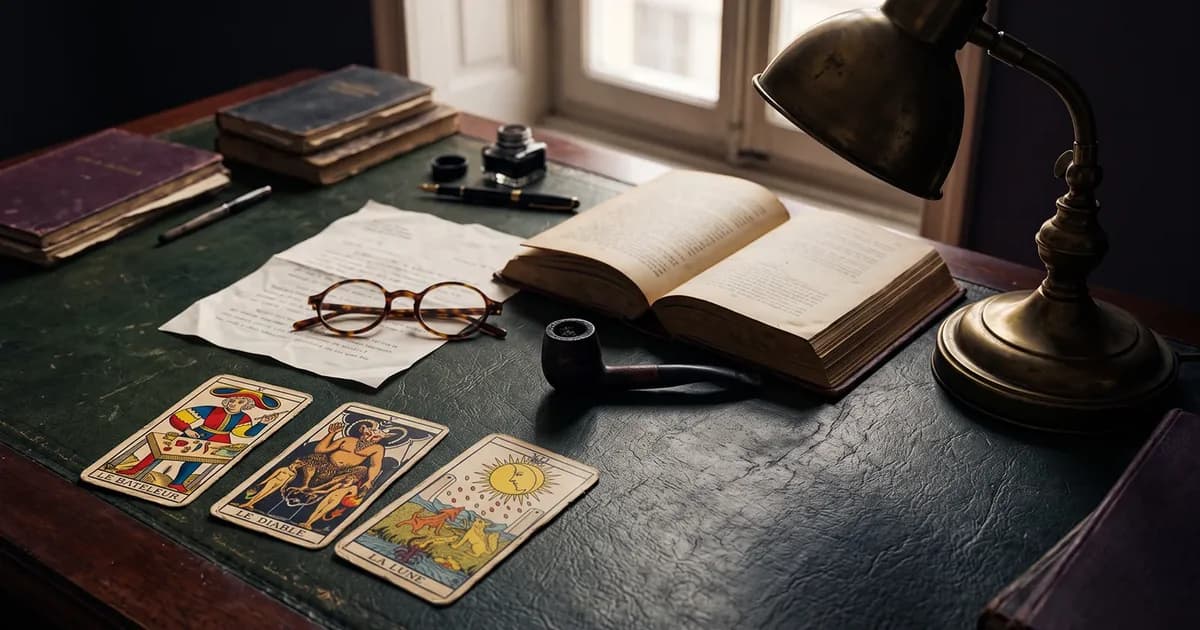
Jung mentioned tarot seven times in thirty years: two letters, two seminars, one paragraph of the Collected Works, a footnote, and an abandoned research program at the Jung Institute. Everything he said, in his own words and with sources, and what he is wrongly credited with.
Why a tarot reading “speaks” to everyone: the Barnum effect, projection, and narrative thinking
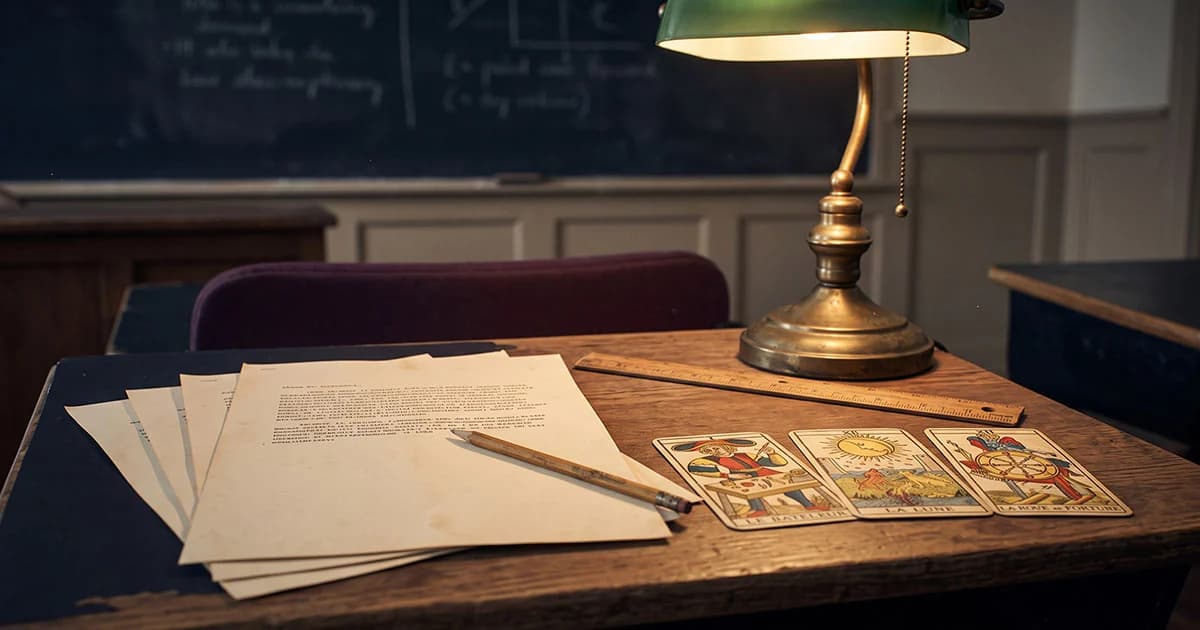
In 1949, Bertram Forer gave 39 students the same personality sketch and they rated it 4.26 out of 5 for accuracy. Four mechanisms explain why a tarot reading feels so personal: the Barnum effect, projection, narrative thinking, and confirmation bias. What each one does, with sources, and how to read a spread with your eyes open.
Why tarot card XIII has no name
The only numbered card of the Tarot de Marseille with an empty title banner, arcanum XIII has intrigued readers since the 17th century. Historical theories, imagery, true meaning — and why it does not foretell death.