
アルカナ13番に名前がない理由
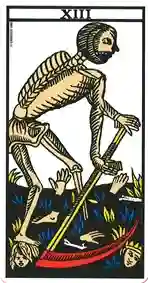
マルセイユ・タロットを手に取り、22枚の大アルカナをめくってみてください。どのカードも銘板にタイトルを掲げています——奇術師、女教皇、世界。すべてのカードに、ただ一枚を除いて。13番目のカードには草を刈る骸骨と番号だけが描かれ、それ以外は何もありません。名前の場所は空白のままです。
この沈黙は印刷職人の見落としではありません。歴史に残る偉大なデッキすべてに貫かれ、やがてこのカードに最もふさわしい呼び名を与えました——「名前のないアルカナ」。この記事では、この空白の由来、カードが本当に描いているもの、そしてなぜ——断じて——誰かの死を告げるものではないのかをお話しします。
要点: アルカナ13番は、マルセイユ・タロットで唯一、タイトルの銘板が空白の番号付きカードです。17世紀以来、偉大なカード職人たちが守り続けたこの沈黙は、カードを一つの言葉に還元させません。その深い意味は根源的な変容であり、死ではありません。
カード13番には何が描かれているのか
肌色の骸骨が横向きに、鎌を振るいながら進んでいきます。足元には黒い大地——しかしこの大地は不毛どころではありません。王冠をかぶった頭、手、骨、そして再び芽吹く草の束が散りばめられています。鎌は刈り取りますが、それでも大地全体は芽生える生命に満ちています。
カードの上部には数字のXIII。下部、他のすべての大アルカナがタイトルを掲げる場所には、何もありません。この対比がいっそう際立つのは、デッキにその正確な鏡像が存在するからです——名前は持つが番号を持たない「愚者」。デッキの両端にある二枚のカードは、それぞれアイデンティティの半分を奪われています。
この図像はすでに多くを語っています。刈り取られたものは、育つものの糧になる。カードが描くのは乾いた終わりではなく、切断が再生を準備する循環なのです。
このカードをさらに詳しく——象徴、恋愛、仕事——知りたい方は、カードの完全ガイドをご覧ください:死神。
数世紀におよぶ沈黙
現存する最古のタロットである15世紀イタリアのヴィスコンティ・スフォルツァ版などは、切り札にタイトルも番号も記していませんでした。遊び手は絵柄を暗記していたのです。名前が現れたのはその後、カード職人たちがデッキを版画で量産し始めた時代でした。
謎はここから始まります。1650年頃のジャン・ノブレのタロットは、13番目のカードに « LA MORT »(死)と記しています。しかし18世紀のフランスの偉大なカード職人たちがすべてのカードにタイトルを加えたとき——世紀初頭のジャン・ドダル、1760年のニコラ・コンヴェル——13番目だけは無言のままでした。ブザンソン系など一部の地方版も同様にカードに « La Mort »(死)と記しましたが、正統なマルセイユの伝統は版を重ねても銘板を空白に保ち続けました。
なぜでしょうか。三つの仮説があります。最も広く知られるのは迷信説——死を名指すことは死を招くことだった、死が早く頻繁に訪れた時代に広まったタブーです。二つ目は職人の慣習説——職人たちは版画から版画へ忠実に模写を重ねたため、最初の空白がモデルの特徴として受け継がれたという説。三つ目は象徴説——この沈黙は意図的で、このカードがいかなる決定的なレッテルからも逃れることを示すためだったという説です。
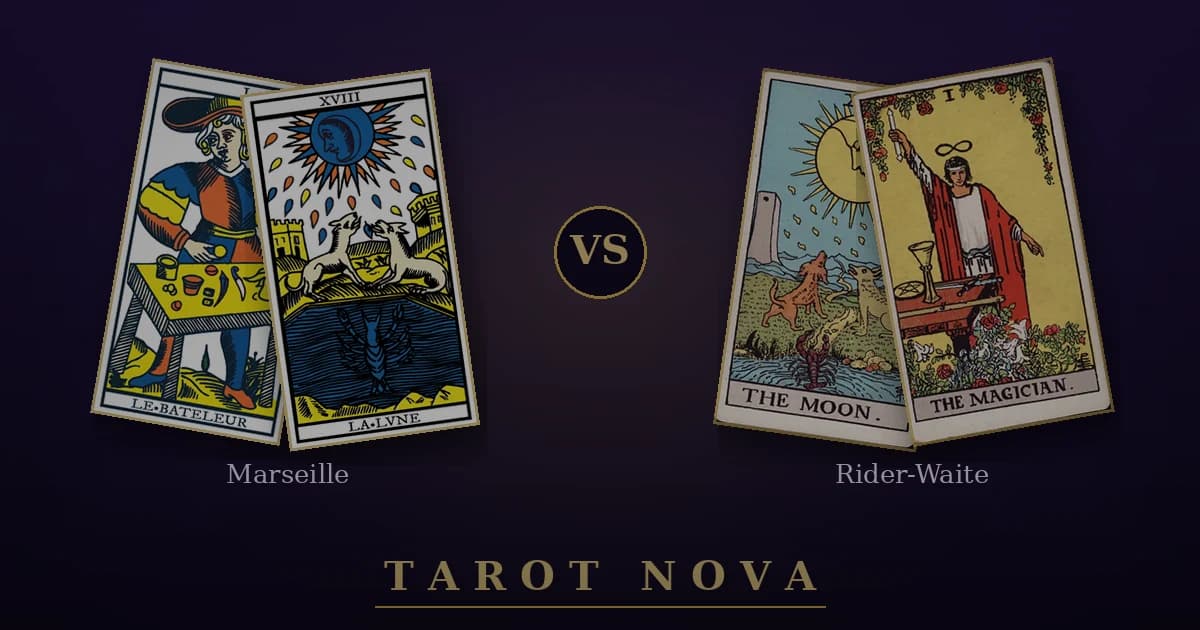
19世紀、フランスのオカルティストたち——エリファス・レヴィからパピュスまで——はこの慣習を定着させ、カードを「名前のないアルカナ」と命名しました。名前の不在を語るための名前です。対照的に、1909年にロンドンで出版されたライダー・ウェイト版は迷いなく自らのカードに « Death »(死神)と名づけました。ここで二つの伝統は劇的に分かれるのです。
アルカナ13番の本当の意味
象徴的な読みにおいて、13番は変容を司る偉大なカードです。何かが完全に終わることで、別の何かが始まれる。周期の終わり、明快な切断、深い脱皮——このカードが語るのは、私たちの内で死んでいるがゆえに切り離すべきものであって、私たちの周りで死にゆくものではありません。
その数字がこれを裏づけます。12は完全な周期を閉じます——12か月、12時間、12星座。13はその先の一歩、新しい土台の上でやり直すことを迫る一歩です。それは通過の数字であって、宣告の数字ではありません。
カードに描かれた黒く肥沃な大地こそ、最も見落とされがちな鍵です。錬金術でも農業でも、黒は豊かな土の色——すべてが分解され、次に来るものを養う場所の色です。名前のないアルカナは破壊しません——堆肥にするのです。
いいえ、カード13番は死を告げません
占いの席での典型的な恐れがあります。骸骨が現れたのを見て、不幸が予告されたと思い込むことです。曖昧さを残さず言いましょう。マルセイユ・タロットの伝統において、アルカナ13番を引くことは誰かの死を告げるものではありません。タロットは象徴の言語であって、戸籍簿ではないのです。
この恐れの多くはポピュラーカルチャーに由来します——映画やドラマは死神のカードがテーブルに落ちる場面が大好きです。また、絵柄を文字通りに読むことからも来ています。空白の銘板が戒めているのは、まさにその読み方です。言葉を拒むことで、カードは安易な近道を拒んでいるのです。
実践では、13番がスプレッドに現れたとき、問うべきは「誰が?」ではなく「何が?」です。どんな状況が、どんな習慣が、どんな執着が周期の終わりに達し、きっぱりと断ち切られることを求めているのか。
スプレッドの中の名前のないアルカナ——四つの場面
質問の領域と周囲のカードに応じて、このカードが実際にどう読まれるかを見てみましょう。
恋愛で
13番はある力学の終わりを示します——必ずしも関係そのものの終わりではありません。カップルのある在り方が尽き、絆が生まれ変わるために葬られる必要があるのです。独身の人にとっては、新しい章を開く前に、繰り返されるパターンに別れを告げるよう促すカードです。
仕事で
これは職業上の脱皮のカードです。役職の終わり、会社での一つの周期の終わり、キャリアチェンジ。終わりゆくものにしがみつくことは断ち切るよりも高くつくこと——そしてその先の大地は肥沃であることを示しています。
審判とともに
13番と20番の組み合わせはデッキで最もダイナミックなものの一つです。切断に続く呼び声。切り離されたものが新しい形で生まれ変わる。自覚をもって迎える再生の典型的な組み合わせです。
神の家とともに
断絶のカードが二枚揃うときはニュアンスが必要です。神の家(塔)は突然開き、13番は深く切ります。スプレッドが描くのは交渉の余地のない変容——耐え忍ぶよりも、寄り添うほうがよいのです。
いずれの場合も、スプレッド内のカードの位置と立てられた質問が、固定された意味よりも優先されます。13番が描くのはプロセスであって、宣告では決してありません。
吊るされた男と節制のあいだ——通過の連なり
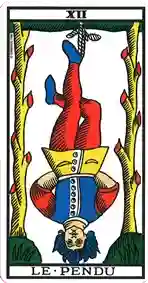
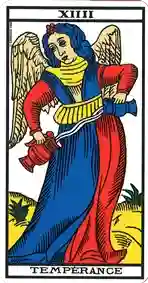
名前のないアルカナは、隣人たちに囲まれたときほどよく理解できることはありません。その前には吊るされた男(12番)——自ら選んだ静止、手放すこと、逆さまに見た世界。その後には節制(14番)——二つの壺のあいだで水を巡らせる天使、癒やし、取り戻された流れ。
順に読むと、三枚のカードは完全な通過を物語ります。立ち止まり(12番)、切断し(13番)、再び流れを取り戻す(14番)。カードをこの連なりの中に置くだけで、それが呼び起こす恐れはしばしば消えていきます——それは動きの途中であって、終止符ではないのです。
このカードをデッキ全体の中に位置づけるには、完全ガイドをご覧ください:マルセイユ・タロットの22枚の大アルカナを理解する。
覚えておきたいこと
- アルカナ13番は、マルセイユ・タロットで唯一タイトルの銘板が空白の番号付きカードである。
- この沈黙は18世紀の偉大なカード職人たち(ドダル、コンヴェル)のもとで定着し(1650年頃のノブレのデッキではまだ「LA MORT」と題されていた)、19世紀のオカルティストたちが「名前のないアルカナ」と名づけた。
- 迷信、忠実な模写、象徴的な選択——三つの仮説は共存し、謎はカードの一部である。
- その深い意味は根源的な変容——周期の終わり、必要な切断、次に続くものための肥沃な大地。
- スプレッドの中で13番は死を告げない——何かが始まるために終わるべきものを指し示す。
さらに深めるには、マルセイユ・タロットの22枚の大アルカナを発見するか、二つの偉大な伝統がこのカードをどう扱うかを比較するマルセイユ・タロット vs ライダー・ウェイトをご覧ください。
XIIIの大鎌、王冠をかぶった首、地面から伸びる芽を細部まで解説しているのが、マルセイユタロット図解シンボル辞典です。
よくある質問
なぜアルカナ13番には名前がないのですか?
どの歴史資料も決定的な答えを与えていません。主な仮説は三つあります。迷信説(死を名指すことは不幸を招くとされた)、職人間で最初から無言だった版画のモデルが忠実に継承されたという説、そしてカードを一つの言葉に還元させないための意図的な象徴的選択という説です。空白はドダル(18世紀初頭)とコンヴェル(1760年)で確認されています。一方、ノブレのデッキ(1650年頃)には「LA MORT」と記されています。
アルカナ13番は誰かの死を告げますか?
いいえ。マルセイユ・タロットの伝統において、カード13番が語るのは変容です——周期の終わり、必要な切断、深い脱皮。タロットは内面のプロセスや状況を描く象徴の言語であり、不吉な出来事を予言する道具ではありません。
このカードは何と呼べばいいのですか?
最も一般的なのは「名前のないアルカナ」——19世紀フランスのオカルティストたちが広めた呼び名——または単に「カード13番」「アルカナ13番」です。「死神」と呼ぶのは他の伝統から受け継がれた近道で、たとえばライダー・ウェイト版は自らのカードに明確に « Death » と名づけています。
恋愛においてアルカナ13番は何を意味しますか?
関係そのものの終わりというより、関係の力学の終わりを示します。ある在り方が尽き、絆が新しくなるために手放される必要があるのです。独身の人には、新しい章を開く前に繰り返されるパターンを閉じるよう促します。
アルカナ13番が逆位置で出たら?
逆位置を読む流派では、逆さのカードは阻まれた、あるいは拒まれた変容を意味します。終わったものにしがみつき、プロセスが停滞している状態です。助言は同じ——切断を受け入れること——ただしそれが遅れているという含みを持ちます。なお、古典的なマルセイユの伝統では、すべてのカードを正位置で読むことが多い点も付け加えておきます。
ライダー・ウェイト版はこのカードに名前をつけていますか?
はい。1909年に出版されたライダー・ウェイト版は13番目のカードを « Death »(死神)と名づけ、白いバラの旗を掲げて馬に乗る骸骨として描いています。二つの伝統の最も目に見える相違の一つです——ウェイトが名づけるところで、マルセイユは沈黙するのです。
関連記事
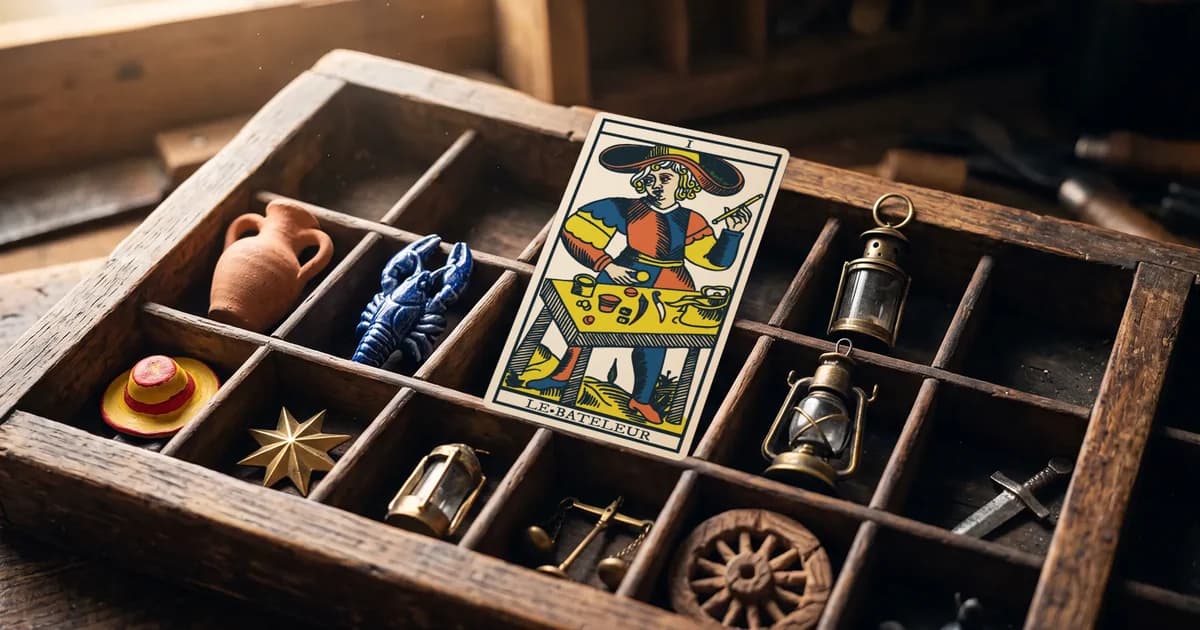
マルセイユタロットのシンボル辞典:124のディテールを1枚ずつ解説
愚者の犬、魔術師の帽子、「月」の19のしずく。大アルカナ22枚に描かれた124のディテールについて、描かれているもの、伝統的な読み、版による違いを示します。すべてConver系の画像で数えています。
マルセイユ・タロット vs ライダー・ウェイト:どちらを選ぶ?
起源、主な違い、比較表、プロフィール別の助言——2つの偉大なタロット・デッキから選ぶために。マルセイユへの率直な愛着とともに。
マルセイユ・タロットの歴史
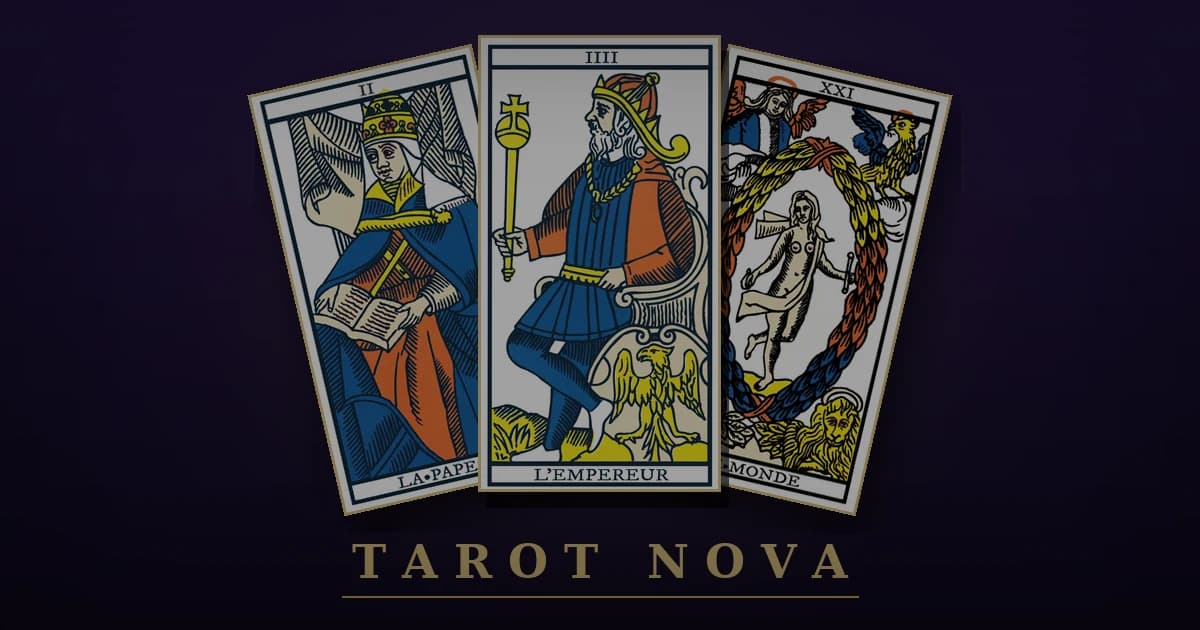
イタリアの起源からマルセイユの伝統まで:タロットを歴史的・文化的・象徴的な対象として理解するための詳細な記事。